

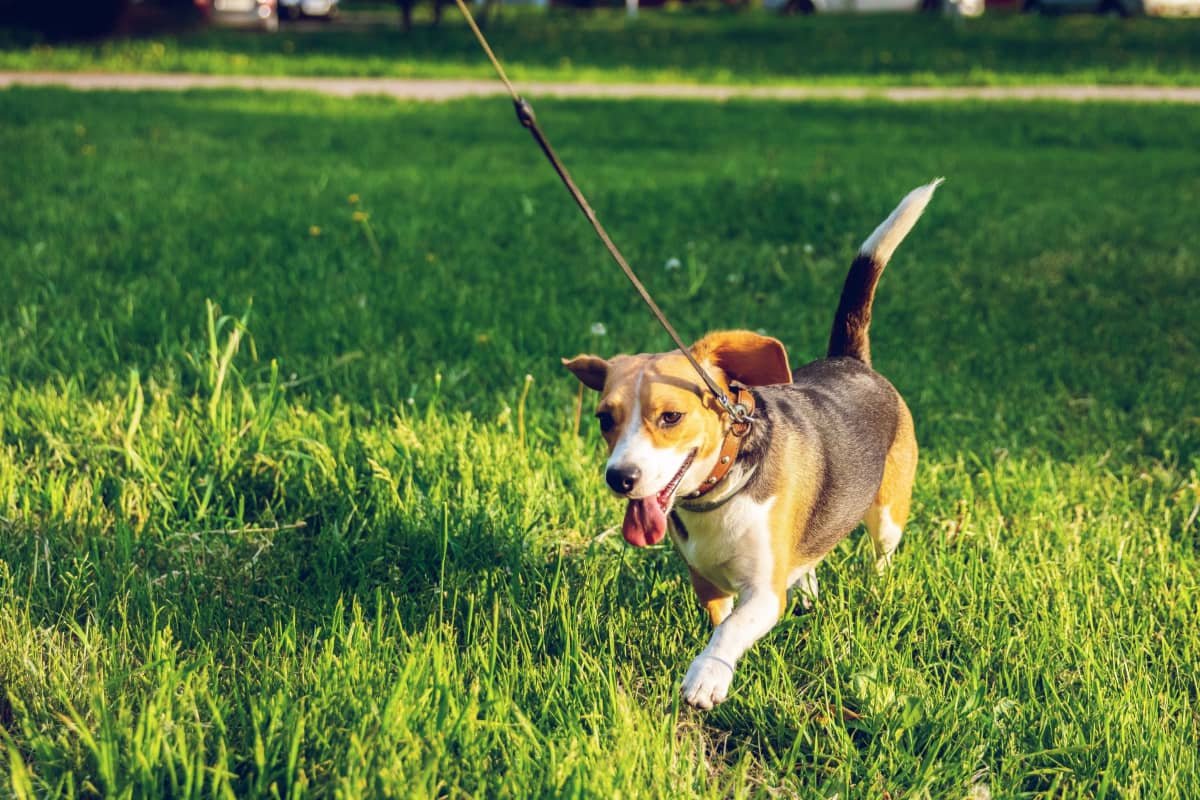
What Is Leash Reactivity? (Why Canine Bark or Lunge on Walks)
In case your canine barks, growls, or lunges the second you step exterior, you’re coping with one thing trainers name leash reactivity. It’s one of the frequent conduct challenges amongst canine dad and mom—and fortunately, one of the fixable with time and consistency.
However right here’s the important thing: reactive doesn’t imply aggressive.
Most canines bark or pull on walks as a result of they’re overstimulated, anxious, or pissed off—not as a result of they wish to battle. The leash merely limits how they’ll reply to thrilling or scary issues round them.
When canines are off-leash, they’ll transfer naturally—circle, sniff, or again away. However on-leash, they’ll’t escape or greet freely. So as a substitute, they bark or lunge as a option to say, “I would like house!”
Frequent Triggers for Barking on Walks
- Different canines approaching too quick or head-on
- Folks sporting hats, coats, or carrying objects
- Bicycles, scooters, or joggers zipping by
- Loud noises or sudden motion
Every time your canine reacts, it reinforces their inner alarm system—making it extra prone to occur once more subsequent time.
Vet Tip: In case your canine’s barking on walks appears sudden or worse than standard, test for ache or discomfort. Again, hip, or neck ache could make leash strain really feel uncomfortable and set off reactivity.
Step 1 — Spot Triggers & Discover Your Canine’s Threshold
Earlier than you’ll be able to educate your canine to cease barking on walks, you should work out what’s setting them off—and the way a lot house they should keep calm.
Each canine has totally different “set off factors.” Some react to each canine nearby, whereas others solely bark when somebody passes too shut. Discovering these particulars helps you prepare smarter, not tougher.
Determine Your Canine’s Triggers
Begin by paying shut consideration on walks:
- What makes your canine tense up or begin barking?
- Do they react to sure forms of folks or canines?
- Are they extra reactive in particular locations (like close to dwelling or on the park)?
Write these observations down—it helps you see patterns over time.
Perceive the Threshold
Your canine’s threshold is the invisible line between calm and chaos.
- Under threshold: Your canine notices the set off however stays relaxed and may reply to treats or cues.
- Above threshold: They’ve misplaced focus, barking or lunging, and may’t be taught in that state.
Professional Tip: When unsure, add distance. In case your canine begins staring, stiffening, or pulling ahead, you’re getting too shut—step again earlier than barking begins.
Step 2 — Gear Up for Success (Leash, Harness, Treats)
Earlier than you even begin coaching, be sure to’ve acquired the proper instruments. The precise leash and harness setup could make all of the distinction between a relaxed stroll and a tug-of-war.
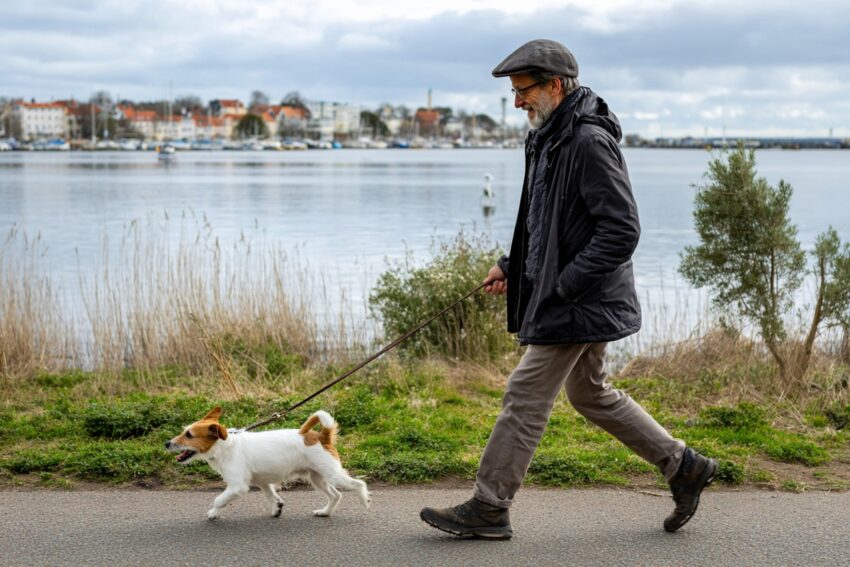
Select a No-Pull or Entrance-Clip Harness
A snug, well-fitted harness offers you management with out placing strain in your canine’s neck. It additionally helps you information your pup gently as a substitute of restraining them.
One nice choice is the Easy Walk® Comfort No-Pull Dog Harness. It’s adjustable, and options two leash clips—one on the chest for steering and one on the again for informal strolling.
Search for:
- Padded straps that received’t rub or chafe
- Entrance clip for management and again clip for informal walks
- Reflective trim for early mornings or evenings
⚠ Keep away from: Retractable leashes. They create rigidity and make it tougher to maintain a constant distance from triggers.
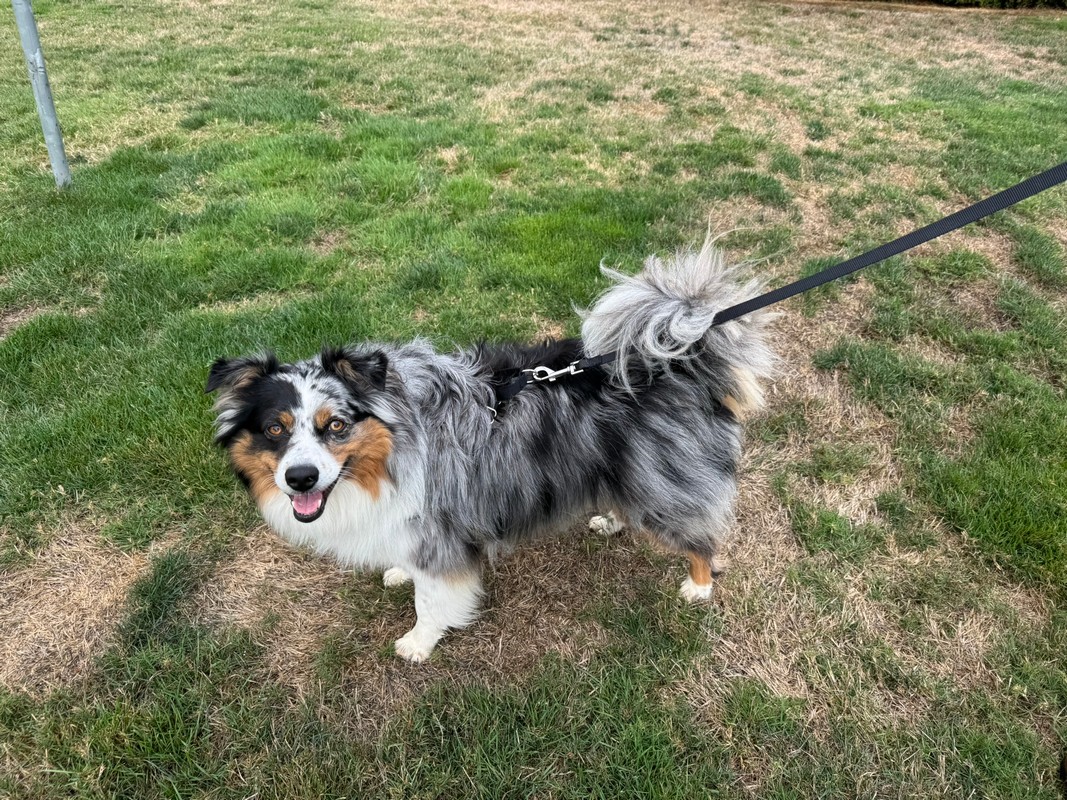
Easy Walk® Comfort No-Pull Dog Harness
The Simple Stroll® Consolation Harness is designed together with your canine’s consolation in thoughts whereas supplying you with the arrogance you need. Its boosted padding will put a pep of their step and the no-pull design will deter even essentially the most persistent puller. It’s a win-win for you and your canine!
We earn a fee should you make a purchase order, at no further value to you.
Inventory Up on Excessive-Worth Treats
When coaching a reactive canine, not all treats are created equal. You’ll want rewards which can be irresistible and simple to ship quick—assume mushy, smelly, bite-sized goodies like cheese, hen, or freeze-dried liver.
Professional Tip: Hold treats in a pouch or fanny pack so you’ll be able to reward immediately when your canine makes the appropriate alternative.
Hold That Leash Unfastened
It’s pure to tighten the leash if you see one other canine coming—however that rigidity travels straight down the road to your pup.
A good leash tells your canine, “Uh-oh, one thing dangerous is coming.”
A free leash says, “We’re superb; you’re secure.”
Training relaxed leash dealing with helps your canine belief that you just’re in management—and that they don’t need to bark to deal with it themselves.
Step 3 — Prepare Under Threshold (Desensitization + Counterconditioning)
As soon as you already know what triggers your canine and the way a lot house they want, it’s time to show them a calmer response. The important thing? Working beneath their threshold—the place they discover the set off however keep relaxed sufficient to be taught.
That is known as desensitization and counterconditioning—a confirmed, constructive technique that helps your canine affiliate their triggers with good issues as a substitute of stress.
Right here’s Do It:
- Begin at a distance the place your canine sees the set off however doesn’t bark.
- The second they keep calm, reward generously with high-value treats and calm reward.
- Proceed treating so long as they continue to be relaxed.
- In case your canine begins barking, you’ve gone too shut—again up and check out once more later.
- Over time, slowly shorten the space between your canine and the set off.
Every session helps your canine construct a brand new emotional connection:
“Once I see a canine → I get one thing superior.”
Vet Tip:
Consider reactivity coaching like bodily remedy—it’s gradual, regular progress that builds long-term resilience. Don’t rush distance adjustments.
Professional Tip:
Quick, frequent classes (5–10 minutes) work greatest. You’re shaping calm conduct, not testing limits. At all times finish on a hit, even a small one.
Step 4 — Redirect Earlier than the Bark (Change, Don’t Suppress)
As soon as your canine spots a set off, you have got a brief window of time earlier than they bark or lunge. That’s your second to redirect their focus—not by scolding, however by giving them one thing higher to do.
This teaches your canine that taking note of you earns rewards, whereas reacting will get them nothing.
Attempt These Focus Video games
- “Watch Me” Cue:
Maintain a deal with close to your eyes and say “Watch me.” When your canine makes eye contact, reward instantly.
→ Nice for canines who stare down different pups on walks. - “Contact” Cue:
Provide your hand and say “Contact.” When your canine bumps your palm with their nostril, deal with!
→ Redirects their focus rapidly and builds confidence. - Scatter Treats Recreation:
If a set off passes by, scatter just a few treats on the bottom and say “Discover it!”
→ Retains your canine’s nostril busy and lowers arousal via sniffing.
⚠ Heads-up: Keep away from yanking the leash or yelling “No!”—it provides rigidity and may make the set off really feel scarier. The aim is to exchange the response, not punish it.
Step 5 — Handle the Atmosphere (So Observe Sticks)
Even the most effective coaching can disintegrate in case your canine retains getting overwhelmed. Till your pup builds confidence, managing their surroundings helps forestall setbacks—and retains each of you calm on walks.
Consider it as setting your canine up for fulfillment as a substitute of throwing them into the deep finish.
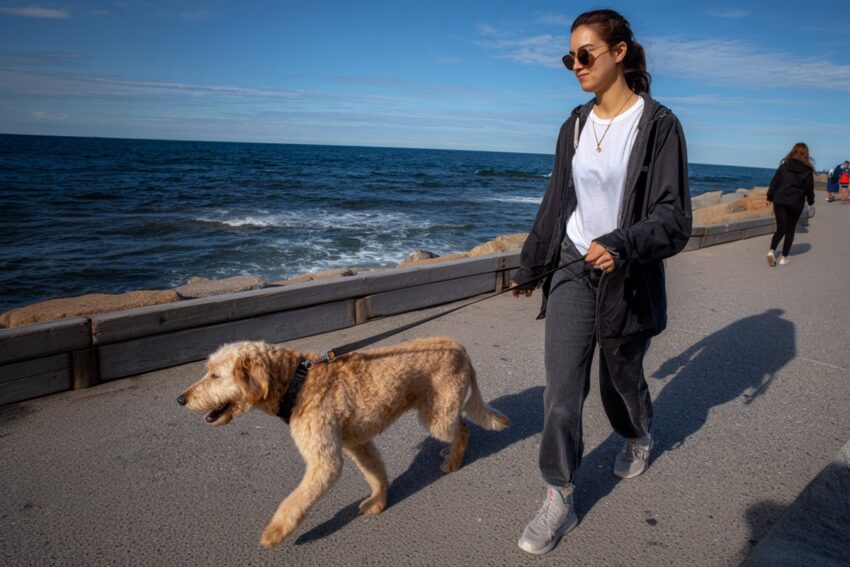
Decide Simpler Strolling Routes
Select quiet streets, parks with huge paths, or neighborhoods the place you’ll be able to preserve a cushty distance from folks and different canines.
In case your standard route is demanding, combine it up! Typically simply altering the surroundings can scale back rigidity.
Stroll Throughout Low-Visitors Instances
Exit early within the morning or later within the night when it’s much less busy. Fewer triggers imply extra possibilities to your canine to follow calm conduct efficiently.
Use Pure Obstacles
When you see a set off forward, step behind a parked automotive, tree, or fence till it passes. Giving your canine a visible break helps decrease their arousal stage.
Observe Calm U-Turns
As an alternative of dragging your canine previous a set off, calmly say “Let’s go!” and switch the opposite method.
Reward them for following your lead—this builds belief and teaches your pup that you just’ll at all times deal with the powerful moments.
Professional Tip: Rejoice quiet, straightforward walks—even when they’re brief! A couple of calm minutes of success do extra for coaching than an hour of frustration.
Step 6 — Stroll Expertise That Calm Reactivity
As soon as your canine begins staying calmer at a distance, it’s time to bolster these good habits throughout real-life walks. Constructing strong leash manners and calm focus will make each outing smoother—for each of you.
Reward Calm Strolling
Each time your canine walks quietly by your aspect—even for just a few seconds—mark it with a cheerful “Sure!” and provides a deal with.
This exhibits your pup that calm = reward, not rigidity or correction.
Professional Tip: Don’t watch for perfection. Reward small wins typically—these brief bursts of focus add as much as lasting progress.
Encourage Examine-Ins
In case your canine glances again at you rather than reacting to a distraction, jackpot that conduct!
Checking in builds belief and teaches your pup that you just’re price taking note of, even when thrilling issues are taking place close by.
Use Quick, Success-Centered Walks
Coaching walks don’t need to be lengthy. In reality, it’s higher to do 10 minutes of calm follow than 45 minutes of frustration.
Finish every stroll on a constructive observe, even when which means heading dwelling early after a small success.
Vet Tip:
In case your canine tires simply or appears sore after walks, test for joint ache or arthritis. Bodily discomfort could make leash reactivity worse as a result of each sudden motion hurts.
Step 7 — Be Constant, Type, and Affected person
Consistency is the key to serving to your canine overcome reactivity for good. Each calm second you reward, each set off you handle nicely, and each relaxed stroll you finish on a constructive observe all add up over time.
Progress received’t at all times be linear — and that’s okay. The aim isn’t perfection; it’s serving to your canine really feel safer and extra assured on each stroll.
Hold Coaching Routines Predictable
Canine thrive on consistency. Attempt to stroll at related instances, use the identical instructions (“watch me,” “let’s go”), and persist with the identical calm, reassuring tone of voice.
That sense of routine builds belief — and belief builds calm.
Get Everybody on the Identical Web page
If multiple particular person walks your canine, be certain that everybody makes use of the identical cues and reward strategies. Inconsistent responses can confuse your pup and gradual progress.
Professional Tip: Hold a fast observe in your fridge or telephone together with your primary coaching phrases, reward timing, and what to do if a set off seems.
Be Affected person and Compassionate
Bear in mind, barking is communication — not defiance. Your canine isn’t supplying you with a tough time; they’re having a tough time.
Reward small wins. Smile at setbacks. You’re each studying collectively.
Fast Troubleshooting: When Barking Nonetheless Occurs
Even with the most effective coaching plan, you’ll have off days. That’s completely regular — canines have feelings, good days, and dangerous days identical to we do. The aim isn’t perfection; it’s progress.
Right here’s easy methods to deal with these inevitable “oops” moments with confidence and calm:
If Your Canine Begins Barking or Lunging
- Don’t panic. Take a gradual breath — your canine feels your vitality.
- Add distance quick. Flip round, step off the trail, or calmly cross the road.
- Keep away from corrections. As an alternative, regain focus together with your “watch me” or “discover it” cue as soon as your pup settles.
Professional Tip: Hold calm physique language. Tight shoulders, sharp actions, or frustration can amplify your canine’s stress.
If Progress Stalls
- Return to fundamentals — improve distance and return to straightforward success zones.
- Use higher-value rewards (like hen or cheese as a substitute of kibble).
- Hold classes shorter; finish on a relaxed observe, not exhaustion.
If Worry Is the Root Trigger
Some canines bark not from pleasure, however from real concern.
In case your canine trembles, hides, or avoids sure triggers, prioritize security and mild publicity.
- Give further house.
- Hold classes brief and constructive.
- Use calm, predictable routines.
Vet Tip: Sudden concern or reactivity in grownup canines can stem from medical points, hormonal adjustments, or ache. At all times rule out well being elements first.
FAQ: Barking on Walks
How lengthy does it take to cease leash barking?
There’s no one-size-fits-all timeline. Some canines enhance in just a few weeks; others take months. The secret is consistency—rewarding calm conduct each single stroll and managing distance from triggers.
Measure progress by smaller wins—like shorter barking bursts or simpler restoration—not simply “no barking in any respect.”
Ought to I appropriate or say “no” when my canine barks?
No. Scolding could make barking worse as a result of it provides stress and rigidity. As an alternative, calmly redirect your canine’s focus together with your cue (“watch me”) or transfer away to a calmer distance.
Constructive reinforcement teaches your canine what to do as a substitute of punishing what to not do.
Are bark collars okay for leash reactivity?
Bark or shock collars might suppress barking quickly—however they don’t tackle the basis emotion (concern, nervousness, or pleasure). They’ll really make reactivity worse over time. Follow trust-based, reward-based coaching strategies.
What if my canine solely barks at sure canines or folks?
That’s frequent! Some canines react to particular appearances (like massive canines, males in hats, or youngsters on bikes).
Hold notes on patterns, then arrange calm, managed follow with these triggers from a distance. Over time, your canine’s consolation zone will develop.
My canine is calm off-leash however reactive on-leash—why?
Off-leash, canines can transfer freely and strategy others in pure arcs. On a leash, that choice disappears, creating frustration and rigidity. The leash limits communication and will increase strain, which might set off barking or lunging.
Resolution: Focus coaching on leash-based greetings and calm passing, rewarding quiet moments typically.
Closing Ideas: Endurance Builds Peaceable Walks
In case your canine barks at folks or different canines throughout walks, don’t lose coronary heart—you’re not failing, and your pup isn’t damaged. They’re speaking the one method they understand how proper now.
With regular follow, house, and calm consistency, you’ll be able to rewrite that story collectively. The barking will fade as your canine learns that the world is secure, walks are enjoyable, and their human at all times has their again.
Bear in mind:
- You’re educating belief, not management.
- Progress may be quiet, however it’s highly effective.
- Each calm step you’re taking is one nearer to peaceable, comfortable walks.
Backside Line: Your canine isn’t supplying you with a tough time—they’re having a tough time. And together with your persistence and love, they’ll be taught that each stroll is usually a calm, assured journey once more.
Trending Merchandise

Dog Training Collar with Remote, 4200FT Electronic Dog Shock Collar with Beep, Vibration, Shock, Light and No Shock Mode, Electric Training Collar Set for Small Medium Large Dogs (Black Green)

Jugbow Dog Shock Collar 2 Dogs – 4200FT Dog Training Collars with Remote, IPX8 Waterproof E-Collar for Dogs Training Rechargeable e-Collars for Large Medium Small Dogs (10-120lbs)


Jugbow Dog Shock Collar 2 Dogs (10-120Lbs) – 4200FT Dog Training Collar with Remote IPX7 Waterproof Electric Collar with 4 Training Modes, Security Lock, Rechargeable e-Collar for All Breeds, Sizes

Bousnic Dog Shock Collar – 3300Ft Dog Training Collar with Remote for 5-120lbs Small Medium Large Dogs Rechargeable Waterproof e Collar with Beep (1-8), Vibration(1-16), Safe Shock(1-99) (Orange)

Heavy Duty Dog Leash with 2 Handles – 6ft Reflective Anti-Pull Leash for Large Dogs, Padded Traffic Handle for Control, Durable Nylon Training Lead (Black)


